

Short answer: Separate the work of finding evidence, organising an argument and improving sentences. Start with the stage that slows you down. A fluent draft can help with expression, but it still needs a source check before you rely on factual claims.
Contents — jump to a section
A concrete example
Write a fictional short proposal for a team workshop. Supply three confirmed facts, the audience and the requested decision. Use one tool to improve the outline or language, then check that it has not invented attendance figures, results or endorsements.
This is a suggested exercise, not a recorded product test. It describes the result to aim for; it does not claim that every listed tool can complete every step.
Prepare these inputs
Prepare the source notes, intended reader, purpose, length and facts that must not change. For research, retain the source passage beside each claim rather than storing only a list of links.
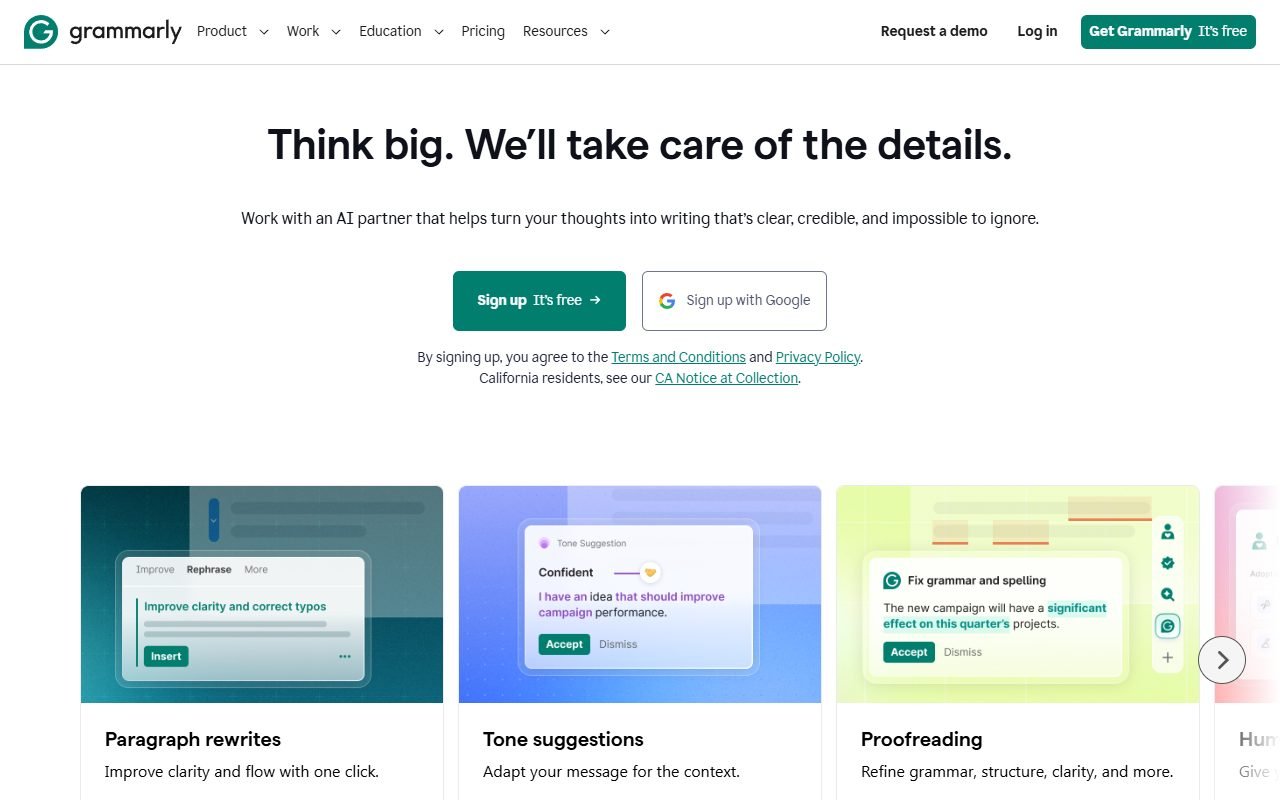 Visit Grammarly ↗
Build it in this order
- Choose one test: build an outline, edit a paragraph or locate support for a factual claim.
- Use the same input with two candidates and keep their first drafts for comparison.
- Correct the selected draft and record the changes needed before it becomes usable.
Check the result
- The text answers the original question and keeps the supplied facts intact.
- A citation leads to a source that actually supports the adjacent claim.
- The final voice suits the reader rather than sounding like a generic promotional article.
If the result fails
If sources are missing, remove unsupported claims or research them separately. If editing changes the meaning, request a smaller revision. If every draft sounds alike, provide a short approved example of the intended voice.
 Visit QuillBot ↗
Time and cost to watch
Compare research time, revision effort and the amount of text you can safely process. A longer generated draft may cost more to verify than writing a short, well-supported answer yourself.
Tools worth comparing
Use the writing and research candidates below according to the chosen stage. Judge each by the work it removes from that stage, not by a single all-purpose score. Keep source checking separate from style preferences.
Sources and scope
The product references for this guide were last checked on 13 August 2026; details may have changed since. Check the official pages below for current plans, limits and terms before choosing a service.
- Grammarly: https://www.grammarly.com/
- Grammarly: https://www.grammarly.com/features
- QuillBot: https://quillbot.com/
- QuillBot: https://quillbot.com/features
- Jasper: https://www.jasper.ai/
- Jasper: https://www.jasper.ai/features
- Writesonic: https://writesonic.com/
- Writesonic: https://writesonic.com/features
- Rytr: https://rytr.me/
- Rytr: https://rytr.me/pricing
- Scalenut: https://www.scalenut.com/
- Scalenut: https://www.scalenut.com/features
- Frase: https://www.frase.io/
- Frase: https://www.frase.io/features