Make is a candidate for automation builders who want routing, iteration, filters, and error handling visible on one canvas. Evaluate it for workflows more involved than a single trigger and action.
Model data volume, retries, and credits or operations consumed, and decide who maintains each service's credentials. The information was checked on 1 August 2026; PickByTask has not tested a real workflow.
Contents — jump to a section
Workflow
Scenario connects modules and mapping on canvas, suitable for multi-step lead routing, content pipeline and data sync.
Logic depth
Router/filter/iterator/error handler provides control but adds learning/maintenance; Set naming/versioning from the beginning
 Visit Make ↗
Price/TCO
pricing changes according to operations/credits/features; Count loops, polling, retries and AI usage, not business outcomes.
Integrations
Number of connectors does not guarantee every action. Check endpoint, pagination, webhook and rate limit per app.
Reliability
Test duplicate event, idempotency, partial failure, replay and alert from execution history.
Visit Make ↗Security
Check connection scope, credential rotation, data logs/retention, region and team roles from official security/docs.
Export/ownership
keep blueprint/documentation but must test import/version/environment promotion; portability is not equal to source-code export
review
G2, Capterra, GetApp, Software Advice, Trustpilot, TechRadar, Zapier and ToolFinder appreciate visual depth/value; dissent is learning curve, operation counting, debugging and support Gartner pool caveat applies
Workflow Scenario: Lead Routing that must not be resent
Use webhook to receive 1,000 lead events from form, check required fields, normalize email/phone, search for duplicates in CRM, separate routes by country/budget, create record, notify Slack and send confirmation email if CRM rate-limit allows retry in backoff; If the email fails, the CRM must not be created again when replaying.
Created test cases for missing payload, duplicate event ID, malformed JSON, 429/500, timeout and credential were revoke. Opened execution history to track which bundle went through which module and replayed only safe jobs, recording operations per accepted lead and number of manual recoveries.
Visit Make ↗Modules, Mapping, Router and Error Handler
| Layer | benefit | Things to check |
|---|---|---|
| Trigger/webhook | Start an event-driven scenario | signature, duplicate ID, queue behavior |
| Modules | Call the action of each app | field/version/rate-limit coverage |
| Mapping | Send values between steps | null/type/date/timezone and PII |
| Router/filter | Broken business logic | route overlap, default path, maintainability |
| Iterator/aggregator | arrange array/batch | operation multiplication and ordering |
| Error handler | retry/ignore/rollback path | idempotency, alert and data loss |
| History/log | debug execution | retention, redaction, search and export |
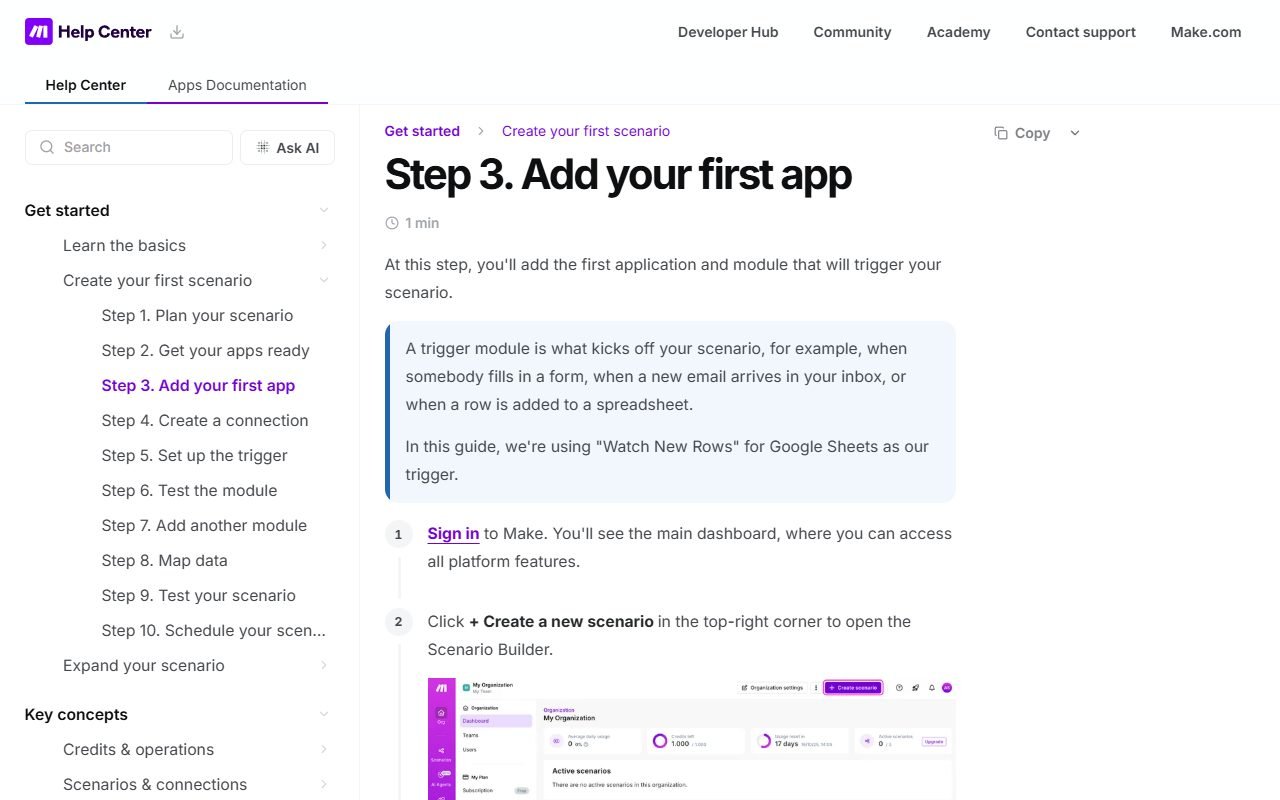
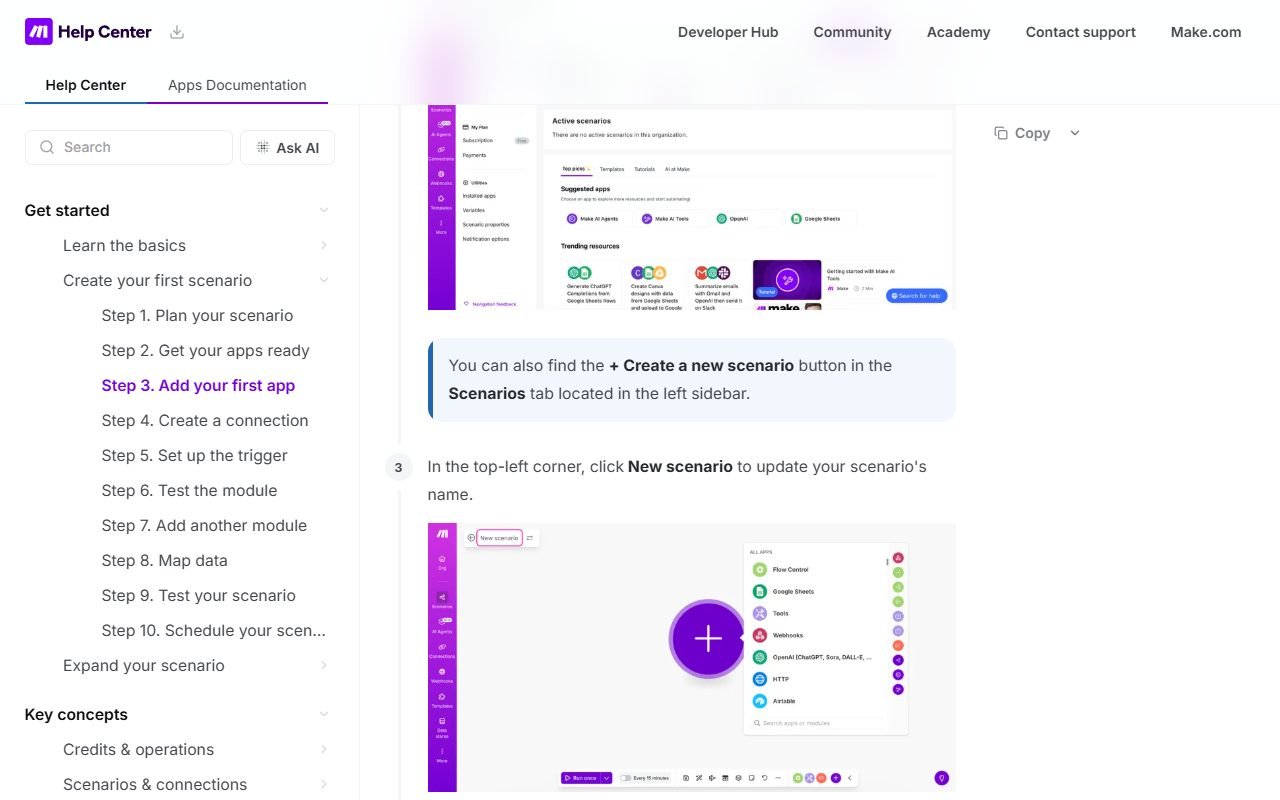
Make Help Center and the error handlers page describe the mechanics of the platform. The reliability score requires the fault-injection log of the fixture.
Pricing/TCO according to the shape of the scenario
| Cost driver | How to calculate |
|---|---|
| Operations/credits | Modules that execute per event include loop/retry. |
| Polling | checks that occur even without a business event |
| AI modules | model/token cost separate from Make plan, if any |
| Data transfer/storage | payload, history and external provider |
| Seats/governance | builders, roles, teams and audit controls |
| Maintenance | API changes, failed runs and credential rotation |
Check Make pricing on approval day and use usage log of 1000 events times traffic scenario. Don't compare the operation to Zapier task or n8n execution one-to-one. Because the counting units are different
Review Synthesis and Dissent
G2 and Gartner-owned pools provide a wide range of automation user profiles, but Capterra/GetApp/Software Advice may share review data. TechRadar/Zapier/ToolFinder provides editorial/comparison context, while Trustpilot provides billing/support dissent.
The recurring positives are that canvas makes branching/data flow more visible and the logic is deeper than simple automation. The negatives are mapping/iterator learning curve, operations added from loops, debugging across routes and support. We don't call value "cheaper" until the same fixture volume passes.
Security, Privacy and Credential Governance
Each connection should use a minimum service account/scope, not a permanent owner account. Appoint a responsible person rotate/revoke and test the scenario after the token expires. Redact PII from log/payload as supported by the platform. Set retention limits and do not send sensitive data into the AI module without checking the processor/policy.
Make security is a provider of evidence that does not certify the scenario configuration. If the webhook does not have a signature or the shared connection is too general, the workflow is still at risk even if the platform passes certification.
Ownership, Blueprint and Recovery
Keep scenario blueprint/version note, connection inventory, data contract, error policy, and environment-specific variables separate. Test, import into new team, and reconnect with least-privilege credentials. Blueprint does not equate to independent source code; If you move the provider, you must rebuild the mapping/actions.
Decision Matrix
| Requirement | Fit |
|---|---|
| Visual branching/transform multiple steps | high |
| Non-developer simple connection | Zapier might be easier to start with. |
| Self-host/data-plane control | n8n should compare |
| High-volume loops | You must simulate operations first. |
| Regulated PII | Require governance/security review |
| Mission-critical transaction | Must be idempotency/monitoring/runbook |
Advantages/Limitations
Suitable for visible branching; Expenses and maintenance increase according to execution shape.
Alternatives
Zapier for easy startup/app coverage; n8n for code/self-host control links /compare/make-vs-n8n/, /compare/make-vs-zapier/
Production Runbook that you must have
Specify scenario owner, business owner, expected volume, acceptable delay, upstream/downstream contacts, credential expiry, alert recipient, and pause/replay/reconcile steps. Every deployment change must include a closed sample payload and a rollback point. When modifying the mapping, check both routes that meet the criteria and routes that should not be called.
The cost dashboard should capture operations per successful lead, failure rate, retries, and manual minutes on a weekly basis. If the numbers jump, check. loop/polling/schema change before purchasing more quota This runbook makes visual automation a system that teams can maintain, not a scenario that only one creator understands.
Additional FAQs
Is one lead equal to one operation?
No, generally several modules/loops/retries May be counted in multiple units. Please see current definition and usage log.
Make it suitable for the financial system or not?
Applicable only when designing idempotency, reconciliation, least privilege, audit and human approval based on risk. You should not make real payments from the demo.
What should I do if the app connector doesn't have the desired action?
Check HTTP/API module, custom app or choose another platform by evaluating auth, maintenance and rate limits first.
Should a large scenario be divided into several parts?
Split when there is a clear data contract, owner, or failure boundary, but the forwarding and idempotency must be noted, otherwise debug/replay will be more difficult.
FAQ
Free tier according to limits; operations not equal to one workflow; AI agents must check plan/beta; Thai data is sent through the connector. Must see the processor.